Get to Heaven Keep the Seven

Everybody wants spirituality. To be a good person means to walk in G-d's ways. How does that translate to reality? The only guidebook to spirituality that has stood the test of time is the Hebrew Bible. The Bible says that the Jews will be a light onto the nations. But if you are not a born Jew, you have to convert, which is not so easy!! If you do convert, it is a lot of work to be a Jew (three times a day prayer, keeping kosher, observing the Sabbath).

This blog will show you how to be Jewish without the work!!

Wednesday, September 5, 2018

Quotes about the theater and the famous Vienna Studttemple and learning about Rosh Hashanah  next week

Can't see images? Click here...

Yehuda Lave, Spiritual Advisor and Counselor

YEARN: We can yearn to do Ha Shem's will instead of focusing on petty matters..

Love Yehuda Lave

I returned August 15 to Jerusalem after a 16 day absence from Israel. I visited over 100 synagogues, graves and holy spots throughout Czech and Vienna, along with castles and tourist spots. My friend the Cabalist, says like the Bal Shem Tov, I was gathering up the holy sparks of Jewishness that has been trapped there and bringing the spiritual energy back to Jerusalem. I hope I have accomplished that goal, but I know for sure that I brought back lots of pictures. There are too many to share at one time so I am trying something new and sharing them day by day as experienced with a 16 day delay. I will repeat this introduction each day. I have been studying Jewish history and Israel in my time in Jerusalem, but the history of the Jewish people in modern times from 1492 to 1945 was in central Europe where the majority of the Jewish people lived. It is worth studying and knowing about and by sharing it with you my friends, I hope I am expanding your knowledge as well.

Great theater is about challenging how we think and encouraging us to fantasize about a world we aspire to. Willem Dafoe, Actor

  A good film is when the price of the dinner, the theater admission and the babysitter were worth it. Alfred Hitchcock, Filmmaker  

Theater is immediate gratification. Chita Rivera, Actress

  The theatre, our theatre, comes from the Greeks. Edward Bond, Playwright  

Television is great but for me, as a performer, nothing compares to a live theatre show. Bruce Forsyth, Actor

  In the theatre the audience wants to be surprised - but by things that they expect. Tristan Bernard, Playwright

  If we don't reach out to make theatre affordable to the young generation, we will lose them all. Kevin Spacey, Actor

  All theatre is absurd. Eugene Ionesco, Playwright  

When it is good, theatre takes a lot of beating both to watch and perform. Dan Stevens, Actor  

Acting in the theatre is fun; acting in film is work. Alec Baldwin, Actor  

I don't mean to be oily, but critics are very much part of the theatre. Diana Rigg, Actress  

        Rosh Hashanah (New Year) guide for the perplexed, 2018
Ambassador (ret.) Yoram Ettinger, "Second Thought: a US-Israel Initiative"
Based on ancient Jewish Sages, September 5, 2018, https://bit.ly/2NfMtFe

More on Rosh Hashanah and other Jewish holidays: http://bit.ly/137Er6J
1. Rosh Hashanah ("the beginning of the year" in Hebrew), the Jewish New Year (5,779), is celebrated on the first day of the Jewish month of Tishrei (תשרי).  Tishrei was a Babylonian term for launching the agricultural (creation) calendar, starting with the planting of seeds and the first rain.

2. Rosh Hashanah is celebrated on the sixth day of Creation, when the first human-being (Adam) was created, highlighting the centrality of the soil – a metaphor for humility - in human life. Thus, the Hebrew word for a human-being is Adam (אדמ), which becomes the Hebrew spelling of "soil" (אדמה) when the Hebrew letter ה (an abbreviation of God, the Creator) is added.

In addition, the Hebrew word Adam (אדמ) contains the Hebrew word for blood (דמ), the liquid of life, and is the acronym of Biblical Abraham (אברהם), David (דוד) and Moses (משה), the three role models of humility.   

3. The Hebrew word "Rosh" means "beginning," "first," "head," "chief." The Hebrew letters of Rosh (ראש) constitute the root of the Hebrew word for Genesis, pronounced "Be're'sheet" (בראשית), which is the first/lead word in the Bible (Book of Genesis). Rosh Hashanah is celebrated at the beginning of the Jewish month of Tishrei, which means beginning/Genesis in ancient Acadian. The Hebrew letters of Tishrei (תשרי) are also included in the spelling of Genesis (בראשית). The Hebrew spelling of Genesis (בראשית) consists of the first two letters in the Hebrew alphabet (אב), the middle letter (י) and the last three letters (רשת) – representing the complete/wholesome undertaking of the Creation. Just like the Creation, so should the New Year (and human actions) launch a thoughtful, long-term – not a hasty – wholesome process.
Rosh (ראש) is, also, the Hebrew acronym of "the will of our Father that is in heaven" (רצון אבינו שבשמים).

4. Rosh Hashanah is one of four Jewish New Years: (a) the anniversary of the Creation, the beginning of the Jewish civil calendar (5,779) and the seasons, the setting of the Sabbatical (7th) and Jubilee (50th) years, and the time for calculating the annual tithe (10%) on vegetable and grains. (b) The first day of the month of Nissan initiates the three Jewish pilgrimages/festivals (Passover, Pentecost and Tabernacles) and the measuring of the reign of ancient kings. (c) The first day of the month of Elul initiated the preparations for Rosh Hashanah and the New Year for animal tithes in ancient Israel. (d) The 15th day of the month of Shvat is the new year of the trees, which provide role-models for human-beings in humility, tenacity and growth.    

5. Rosh Hashanah is announced, and celebrated - in a humble and determined manner - by the blowing of the Shofar (the ritual ram's horn). It is a wakeup call morally, individually and collectively.  The Hebrew spelling of Shofar, שופר, is a derivative of the verb שפר, which means to enhance – an unending, uphill effort (sometimes, against all odds) for improvement.

6. The shofar is the epitome of peace-through-strength.  It is made from the horn of a ram, which is a peaceful animal equipped with strong horns to fend off predators. The numerical value of the Hebrew word for "ram," איל, is 41 (א-1, י-10, ל-30), which is equal to the value of "mother" (אם, א-1, ם-40), who strongly protects her children. Rosh Hashanah prayers highlight motherhood, optimism and the pregnancies of Sarah, Rachel and Chana, who gave birth to Isaac, Joseph, Benjamin and Samuel, respectively. Noah – who led the rebirth of humanity/world – also features in Rosh Hashanah prayers.

7. Rosh Hashanah and the blowing of the Shofar….

*Constitute a moral wakeup-call, providing an expressway for prayers;

*Alert humanity to pending positive and negative significant developments (e.g., deliverance and attacks);

*Tumbled the walls of Jericho, and intensified Judge Gideon's posture of deterrence during his war on the Midianites;

*Reaffirm the faith in God as the Creator, the supreme king (ancient kings were anointed to the sound of the Shofar) and judge (a day of judgment). An ancient expression of "In God we trust.";

*Intensify the bonding of God and human beings;

*Commemorate the creation of the first human-being, Adam, on the sixth day of the Creation;

*Underline the annual judgment day, soul-searching and behavioral enhancement. 

*Highlight the almost-sacrifice of Isaac – which was avoided by God's angel and a ram (a paradigm shift away from human sacrifices!) - and the Biblical (Abrahamic) Covenant;

*Remind us that the three Jewish Patriarchs, Abraham, Isaac and Jacob, and the Prophet Samuel (the latter inspired Thomas Paine, the author of "Common Sense," the cement of the American Revolution), were conceived/born during the month of Tishrei, "the month of the strong ones " (Kings A, 8:2);

*Blasts of the Shofar – along with thunder and lightning - were heard when Moses ("the humblest of all human-beings") received the Ten Commandments on Mount Sinai, a unimpressive, relatively-undersized (humble) mountain;

* In ancient times, the Jubilee (Leviticus 25:10) was announced - every 50 years - by the blowing of the Shofar, ushering in deliverance from spiritual and physical slavery (release of slaves and land). The Jubilee was the role model of liberty for the early American Pilgrims and Founding Fathers. It inspired the anti-slavery Abolitionist movement in the USA. Jubilee - "Yovel" (יובל) in Hebrew – is a synonym for Shofar (the ram's horn);  

*Highlight the ingathering (Aliyah) of Jews to the Jewish Homeland;

*Emphasize optimism in the face of challenge and adversity.

8. Rosh Hashanah was conceived by Jewish sages, during the Second Temple period, referring to the Biblical "day of blowing the shofar" and "the day of commemorating the blowing of the shofar" (Leviticus 23:23-25, Numbers 29:1-6). Commemoration is a central Jewish value – a prerequisite for national cohesion, survival, an enhanced future and abstention from past critical errors. On the other hand, forgetfulness spells ignorance, loss of critical values and lessons, and therefore the tendency to repeat past errors.

9.  Rosh Hashanah initiates the Ten Days of Repentance, which conclude on Yom Kippur (the Day of Repentance). It delivers a message that one should never underestimate one's capabilities to enhance one's fortunes, when guided by morality-driven tenacity/determination and faith.

10. It is customary to eat pomegranate seeds on Rosh Hashanah, accompanied by the following blessing: "May your benefits multiply like the seeds of the pomegranate." The pomegranate is supposed to contain (at its prime) 613 seeds – the number of Jewish precepts, which regulate the Jewish way of life. The pomegranate – a prominent ornament of the Torah scrolls - represents fruitfulness, knowledge, learning and wisdom.

May the New Year, 5779, be top heavy on health, modesty, humility, challenge and reward.
 More on Rosh Hashanah and other Jewish holidays: http://bit.ly/137Er6J

Street Life in London, 1876-1877

Check out our photographic homage to the street life in the city of London during the years 1876-1877. We hope you enjoy.

How Its Made Pineapples Discovery Channel

I am addicted to learning how things, are made, built, and manufactured. This might be a redundant statement but it is what I enjoy. This is the reason I am sharing all these with you guys! If you enjoy please thumbs up and sub cause I will be uploading a ton more


K A H A N E

The magazine of the Authentic Jewish Idea

September – October 1990  Ellul 5750 – Tishrei 5751


ISAIAH 6: 9-10 


Some 2500 years ago the Prophet Isaiah was chosen by the Almighty as His prophet to His people, Israel.  And thus did G-d speak to Isaiah:  "… Hear ye indeed – but understand not, and see ye indeed – but perceive not.  Make the heart of the people fat and make their eyes heavy and shut their eyes; lest they, seeing with their eyes and hearing with their ears, and understanding with their heart, return and be healed . . ." (Isaiah 6:9-10). 


That the Jewish people in both the Land of Israel and Exile hear and understand nothing and see and perceive not, is so abundantly clear as to be beyond debate.  The only question is whether there is hope left for them or, because of their stubborn refusal to see and understand, the almighty brings down upon us the curse of Isaiah 6: 9-10 in which as punishment, the Jew is no longer allowed to see and understand (See Radak, Ibn Ezra Ibid.).  But whatever the reason for the phenomenon, it is clear; it is an indisputable fact: The Jew is blind and deaf and lacking in understanding.  And worse:  He does not want to see; he does not want to hear; he does not want to understand, because the reality is so difficult and tortuous and agonizing, and it would call upon him to take steps that he refuses to even contemplate. And so, the edge of the cliff comes closer and the coach and its wildly charging horses rush to it.


As I await the resumption of my trial for "incitement" after having stated that the Arabs are a cancer in our midst, I look at an article in the paper today that tells of a policy involving the building that houses the Supreme Court of Israel, the one that ruled that Kahane is a "racist".  The article describes a policy that bars any Arab from the territories from entering the building even if he is a worker hired to repair the building.    Furthermore, any Israeli Arab, meaning a citizen if Israel, can only enter the building to work with a policeman in tow, who must be with him all the time.


I am deeply moved by this expression of trust in the loyal citizens of Israel and can hardly wait for the Supreme Court to send the racist Kahane to Jail.  This goes along with the policy of the Knesset of Israel which bars any Arab from working in the building, even as a waiter, and any Arab taxi driver from entering past the guard post. 


Indeed, as I once told Arab Knesset Member Muhammad  Watad, in replying to his motion to condemn Kach's victory in the Kiryat Arba elections:  If you had not been elected as a Knesset Member you would not be allowed here as a waiter. 


And then, I read about a secret military prosecution report to the Attorney General and the State Attorney (who led the fight to bar me from the Knesset), which states that Faisal Husseini is one of the four Arab leaders of the intifada and the PLO's representative. I know that at that moment, Husseini was in the U.S. with Moshe Dayan's daughter, being welcomed and cheered by liberal Jews, by Jewish leaders and temple rabbis, and spoke at the Los Angeles Jewish Federation building, from which Jewish "racists" are barred.


And then, I go over the foreign news and my heart is warmed by such items as Amal and Hezbollah factions killing each other by the scores in southern Lebanon; Christians and Moslems doing the same in Beirut.  Tamales and Singhalese are massacring each other in Sri Lanka; Serbs and Croats engage in bitter dispute in Yugoslavia along with fighting between Serbs and Albanians while the Slovenes there want to break away and form their own state, and the Macedonians are demanding land from Greece which is engaged in a bitter dispute with Turkey in Cyprus, while the former is furious over Bulgarian treatment of its ethnic Turks.  Meanwhile, the Kurds are fighting the Turks (and the Iraqis) for their own land and the Iraqis take over Kuwait which was already sending back Palestinians who work in its oil fields because they are an internal danger . . .


And watching all this is Great Britain, which demands that Israel sit down with the PLO while it refuses to meet with the IRA which kills three policemen and a nun in its struggle against the Protestants.  And in the capital of the European Common Market, Belgium, Flemish and Walloons fight a bitter language battle that tears the country apart, and the sick giant of the East, the Soviet Union, is hardly Soviet and less of a union with tens of different ethnic groups shouting "nyet, we want out."  And in the New World, the French dream about a Quebec libre, and the Indians in New York State and Canada and all over are on the warpath and in Los Angeles an Hispanic school district is carved out, and blacks hate Koreans, and whites hate blacks and vice-versa, and it is so clear that if only Jews had the good will and made the necessary compromises they and the Arabs could live together happily because they have so much in common...!   


No, there is no doubt.  It is a people that are very disturbed.  Seeing nothing, hearing nothing, understanding nothing and not wishing to.


And then, a long article appears in the Friday edition of Ha'aretz. The title?  "Israel Arabs Seek Autonomy."


Indeed! Boker Tov!  Good morning.  Surprise.  And after autonomy? Guess, dear Jew.  But what most impresses me is the following quote from the article: "The Arabs of the Galilee speak bitterly about the official description of the state as the 'Jewish people's state.'"  In their eyes, there is a contradiction between this and the universal description that maintains that a state is first and foremost the state of all its citizens."


Well, well, well.  And when did we first hear that?  And who was the first to declare that there is a basic contradiction between a democratic universal state and a Jewish one?  Of course the Arabs are right.  And of course we must choose and of course we must choose a Jewish state and of course the Arabs must go and of course it is because they are a cancer.  I say it again and if the government wants to put me on trial again, let them do so.  But the truth is the truth.  They are a cancer; a dangerous and spreading one and they must go.

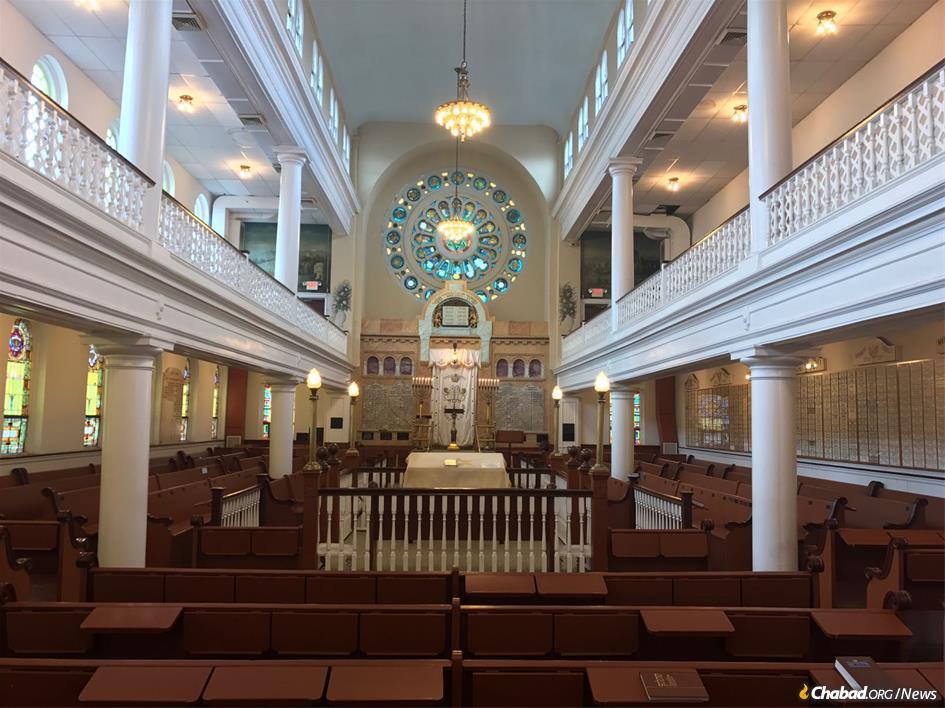
Vienna's famous Studttemple

Built in 1825 it was the only temple in Vienna not destoryed on the outside. It was destroyed on the inside but rebuilt after the war beautiufully

This is fascinating. You'd swear the things he draws are real.

Stefan Pabst - 3D DRAWINGS

Source for Afterlife

I know that Judaism believes in the afterlife, but in reading the Torah I did not see any mention of that. You would think such major, essential, fundamental ideas would be openly stated. Where is this discussed?

The Aish Rabbi Replies:


Maimonides writes (Teshuva 8:1) that we know of this from the Torah's statement in Deuteronomy 22:7: "You will have good and your days will be long." Without the traditional interpretation we could think it is just promising long life in this world. Elsewhere, Maimonides also mentions Numbers 24:17-18 and Deuteronomy 30:3-5.

The afterlife is discussed in detail in the Talmud, Sanhedrin Chapter 11.

Another source for the afterlife is logic: The soul, which is spiritual and therefore cannot die or decay, existed in the "world of souls" before the body was "born," and will continue to exist after.

The reason the afterlife is not mentioned explicitly in the Torah, is because the purpose of earthly existence is to do good in this world, to give the soul a chance to elevate itself. To the extent we make the right "spiritual" choices (e.g. give charity, care for others, pray, study Torah) is the extent that we become sensitive to the spiritual reality of God. This attunes our soul to appreciate the pure spirituality of the eternal afterlife.

The famous book Path of the Just explains that the purpose of life is to enjoy God's radiance. Rabbi Noah Weinberg explains that this refers to the pleasure we get in this world from doing good. The eternal reward will come of its own accord, providing that we do good in this world. Further, the eternal reward is perhaps too intangible to be an effective motivator.

Finally, the ultimate reason for serving God and doing His mitzvot is so that we can become close to God, love and admire His essence. Thus, we should serve God whether or not there is a reward or punishment, either here or in the afterworld. (source: Maimonides - Mishnah Sanhedrin 10; Chatam Soffer Y.D. 356)

See you tomorrow

Love Yehuda Lave

Rabbi Yehuda Lave

2850 Womble Road, Suite 100-619, San Diego
United States

LIKE TWEET FORWARD

You received this email because you signed up on our website or made purchase from us.

Unsubscribe

Tuesday, September 4, 2018

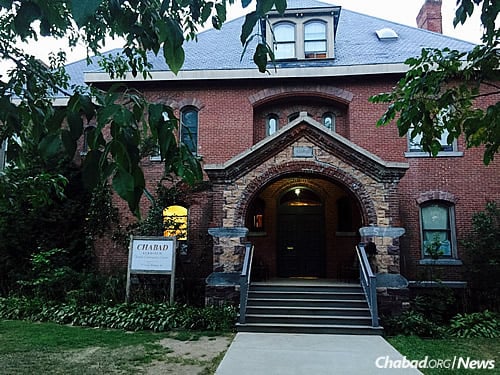
Rosh Hashanah and Yom Kippur coming up and Chabad offers free servicers worldwide

DISCIPLINE: At any moment, we can do some act of self-control (especially in what we say, eat, buy, etc.).
COURAGE: We can manifest courage by "doing the difficult" – especially difficult acts of chesed and fighting for justice.
BENEFIT OF THE DOUBT: Unless we are dealing with an evil person, we can assume that the people who hurt us are not doing so out of any evil intention to harm, but are simply tired, forgetful, unaware or overwhelmed with other matters.
Love Yehuda Lave
I keep reminding myself that people are always giving whatever they can give, to the best of their ability, at every given moment.

It was a great relief to stop being an emotional beggar, always dissatisfied and frustrated that people weren't filling my beggar's bowl. Paradoxically, when I appreciated them for what they could give, it seemed suddenly that people wanted to give me more - if they were capable of doing so.

Monday and Tuesday next Week are Rosh Hashanah. Wendesday is Zom Gedaliah. Please write me if you have any questions about the holidays. Chabad always has free services, so you don't have to buy a seat at a syngagoue but it is always nice to support your local synaggouge.

Love Yehuda Lave

The Six-Sentence Thank You

By Avraham Plotkin

I never realized how saying "thank you" is such an integral part of our Jewish tradition, until I was doing my weekly reading of the Torah, and I was struck by the way Jews thank. Well, to be honest, I always knew about the farmer's mitzvah to say "thank you" by bringing his bikkurim—the first of his produce—as a form of thanks to G‑d. What I didn't pay attention to in the past was the extensive language of his obligatory thanks:

And you shall call out and say before G‑d, your G‑d, "An Aramean [Laban] sought to destroy my father [Jacob], and he went down to Egypt and lived there with a small number of people, and there he became a great, mighty and numerous nation. And the Egyptians treated us cruelly and afflicted us, and they imposed hard labor upon us. And we cried out to G‑d, the G‑d of our fathers, and G‑d heard our voice, and He saw our affliction, our labor and our oppression. And G‑d brought us out from Egypt with a strong hand and with an outstretched arm, with great awe, and with signs and wonders. And He brought us to this place, and He gave us this land, a land flowing with milk and honey. And now, behold, I have brought the first of the fruit of the ground which you, O G‑d, have given to me . . ."

I wondered whether this was not a case of the Bible getting carried away
When I first read this verbose thank-you, I wondered whether this was not a case of the Bible getting carried away with some flowery poetry. Couldn't G‑d have given the poor farmer who traveled all the way to Jerusalem a simpler way of saying "thank you"?

But upon reflection, I realized that the Torah was actually giving us a great lesson in humanity. Saying "thank you" should never be some brief line that we were taught to say by rote. "Don't forget to say thank you and please," I hear many parents telling their children. Which is great, but there is more to thanking than just the fulfillment of some social convention and responsibility. Saying thanks is a full realization of the context of the gift or kindness that we have received and of the history behind it, and is an expression of our inner appreciation of the gift.

When we thank our parents, spouse or friends, we need to take into consideration what these people have done for us, not only today but in the past. We need to consider the words that we offer, so that it paints a full picture of our sincere appreciation for what we have been given.


By Avraham Plotkin    More by this author
Kohen Marriages

I am a Reform Jew and am now looking to get married. I went to a few Jewish dating sites, and I saw some profiles which say "permitted to a Kohen." I am a Kohen, and therefore this caught my attention. What exactly are they talking about?

The Aish Rabbi Replies:

A Kohen is not allowed to marry a divorcee, a convert, or someone classified as a "zonah." (see Leviticus 21:14; Talmud – Kiddushin 78a; Maimonides – Forbidden Relations 18:3)

A "zonah" is defined as a woman who had intimate relations with a man whom she was forbidden to marry according to Jewish law – e.g. adultery, incest, or relations with a non-Jew.

A Kohen is forbidden to marry these women, not because she is a bad person, but because there is metaphysical reality that is created which prevents a Kohen from being able to create the proper bond. Consider that H2O is water, and H2O2 is Hydrogen Peroxide. The difference may seem negligible, but is actually the difference is between life and death.

This is a very serious issue, and if a Kohen goes ahead and marries someone that he is not allowed to be married to, he is transgressing a Torah commandment every minute he remains married to her.

On a practical level, the kohanim, who are charged with being the spiritual leaders and role models for all of Jewry, must preserve a more scrutinizing level of holiness. The fact that a particular Kohen today may not see himself in such a lofty role does not diminish his obligation to live up to that.

There is another issue, however. It is important to check if the "Kohen" is a real "Kohen." How reliable is the Kohanic tradition in the family? Just because someone's last name is "Cohen" does not mean that he necessarily has the status of a Kohen. To be considered a Kohen, one must have an unbroken tradition, as well as other factors too numerous to mention here. (Nevertheless, most people who have the name Cohen also have the status as Kohen.)

Also, it may be that the Kohen is really a "chalal." If his mother, paternal grandmother, etc., was forbidden to marry a Kohen, in that case the resulting son would be a chalal, not a Kohen – thereby disqualifying the "Kohen" (and his subsequent descendents) from the regular Kohanic rights and obligations.

Bottom line: If you have any questions about your status, or about that of any particular young woman, you need to speak with a reliable authority in Jewish law.


[Joseph] dreamt another dream ... the sun, moon, and the eleven stars were bowing before me (Genesis 37:9).


Joseph dreamt of greatness, and he achieved it. Still, he paid a steep price for that greatness, suffering years of enslavement and imprisonment.

Some people are satisfied with their status quo and choose not to rock the boat. Others are dreamers, people of great ambition.

Dreams and fantasy are very different. Fantasy is mere wishful thinking, something we know is beyond reach, but a dream is something that may be in the remote future, yet is conceivably achievable.

Suppose Joseph had known that, in order to obtain the promise of the dream, he would have to endure years of suffering. Would he have foregone the greatness, or would he have accepted the pain? Since Joseph understood the dream to be a revelation of the Divine plan for him, he undoubtedly would have chosen to accept the suffering it entailed.

We may be frequently confronted with a decision whether to resign ourselves to the status quo or to try to advance ourselves at considerable cost. We should avail ourselves of expert counseling and pray for Divine guidance to know what the Divine plan for us is. If we feel secure in the knowledge that God wants us to advance to our optimum potential, we should not retreat because of the personal cost entailed.

Infants are fortunate; they do not have to choose whether to remain toothless or to accept the distress of teething. While we do have such choices, we also have the wisdom to make the right choice.


Today I shall ...
...

pray for enlightenment as to what is God's will for me and for the fortitude and courage to achieve it.

Free High Holiday Services at Thousands of Chabad Synagogues

Continuing a decades-long tradition that has offered countless Jewish families and individuals a place to worship

The sanctuary of the historic B'nai Abraham synagogue in central Philadelphia. It will again open its doors to worshippers free of charge for the High Holidays this year. To be sure, donations are recommeded for those who can afford it, but like thousands of Chabad synagogues, no one is turned away for financial reasons. It is a model that has been emulated by other Jewish houses of worship around the world.

The calendar is turning to September, and the anticipation is palpable. Jewish men and women the world over—and certainly, the children, too—are preparing for Rosh Hashanah. Meals are in the works, new clothes have been laid out, crafts and projects have been made.

And, of course, people are readying themselves for services and synagogue programs of all kinds.

But what happens when a family or individual, for one reason or another, has no regular shul to attend? What happens when they find themselves in a new town or in economic straits or, perhaps, decide at the last minute that they want to attend services?


Continuing a decades-long tradition that has drawn countless Jews into synagogues for the Jewish high holidays, Chabad-Lubavitch will hold thousands of free High Holiday services around the world as part of a model that has no dues and no membership—a model that other synagogues and organizations around the world are looking to replicate.

The message is: "Come one, come all. We will not turn you away."

"I feel that, especially if it is the first time a person comes to a shul, you want them to be comfortable and not think, 'Oh, I have to pay for it,' " says Rabbi Yitzchok Raskin, co-director of Chabad of Vermont in Burlington, Vt., with his wife, Zeesy. "We want people to get involved and get closer to Yiddishkeit."

Since fees can wind up an obstacle, he continues, "we are helping them out on Rosh Hashanah and Yom Kippur, when most people want to come to synagogue."

Enter Chabad, Literally


Chabad of Vermont will welcome about 100 people for services on Rosh Hashanah and Yom Kippur, quite an increase from the 30 or 40 for a typical Shabbat. The Raskins will also host a communal meal on Rosh Hashanah; a donation of $36 is requested, but anyone is welcome to attend.

It is Chabad's firm belief that Jewish traditions and customs are the birthright of every Jew, and that every Jew should have access to them.

This year's services bring added significance as Jewish communities worldwide celebrate the year of Hakhel, a time to promote Jewish unity and learning. Throughout the year, Jewish synagogues and organizations will host communal gatherings for men, women and children dedicated to encouraging the observance and study of Torah.

After all, it is Chabad's firm belief that Jewish traditions and customs are the birthright of every Jew, and that every Jew should have access to them.

"The idea that you have someone at the door and don't let a person in because they don't have a ticket is simply ridiculous," says Rabbi Yisroel Fried, program director with his wife, Esther Miriam, at Chabad of the West Side in New York. "Everyone has to be allowed into shul to daven."

Room for Everyone

So why charge a fee at all?

"We like people to reserve a space by buying a seat because sometimes we are so full we can't guarantee one," the rabbi explains. "But if someone can't afford it or money is tight, we don't hold people to the requested amount."

Chabad of the West Side can easily fit 250 people around tables in the sanctuary and can add more chairs along the walls, "but it gets really tight space-wise, especially for Kol Nidre and Neilah on Yom Kippur," says Fried. "Sometimes, we have some people just standing."

He notes that the synagogue has been asking for a seat fee for more than a decade, and that most people understand the need to do so.

"We do it in the lightest way possible, and everyone is guaranteed to come in," he stresses.

High Holiday services this fall bring added significance as Jewish communities worldwide celebrate the year of Hakhel, a time to promote Jewish unity and learning.

Chabad Houses that cannot accommodate the overflow holiday attendance often rent hotels or other spaces so all can come and pray for the holidays, and bring friends and family members. While a number of Chabad emissaries may have a donor who steps forward to underwrite the costs, most will ask for a nominal fee to help offset the charges.

Still, at the end of the day, Chabad emissaries prefer not to charge anything, and rabbis say that should never be the caveat for attending or not attending. Come one, come all—they'll make the room.

Such is the case at the Chabad of Waukesha-Brookfield in Wisconsin, co-directed by Rabbi Levi and Freida Brook. While people are asked to RSVP for High Holiday services, the registration page makes clear that all donations are optional.

"Participation in all High Holiday programs is free," says a note on the webpage. "Consider a donation to help cover the costs of these and other wonderful and vital programs that Chabad of Waukesha-Brookfield brings to our community."

Rabbi Brook believes that affiliation in the Jewish community, especially for the High Holidays, shouldn't come with any kind of price tag.

"We try and have no dues, even though we do have people come every week," he says. "That's not to say dues are a bad thing, but I don't want someone to be in a situation where they get turned away because of what is or what is not in their wallet."

To find out more about High Holiday services and programs at a Chabad center near you, visit the directory here.

The doors to Chabad-Lubavitch centers in North America and throughout the world are open for the High Holidays, offering free services to Jewish people, like at Chabad of Vermont in Burlington.

See your Tomorrow

Love Yehuda Lave
View this email in your browser
You are receiving this email because of your relationship with Yehuda Lave, Spiritual Advisor and Counselor. If you do not wish to receive any more emails, you can unsubscribe here.
This message was sent to loveheced.lovehesced@blogger.com by yehudalave@yehudalave.co
Jerusalem, Israel, California, 92106


Unsubscribe from all mailings Unsubscribe | Manage Subscription | Forward Email | Report Abuse

Monday, September 3, 2018

Quotes from my Sister about life and Vienna Friday walk to the Opera House

Can't see images? Click here...

Yehuda Lave, Spiritual Advisor and Counselor

Picture Success

We were put into this world to accomplish. Each of us has a unique mission. There are many different forms of personal achievement, just as there are different people on our planet.

Make it a regular habit to imagine yourself accomplishing what you wish to accomplish. This will motivate yourself to accomplish more. As you create these visions in your mind's eye, you will be conditioning yourself in a way that - in reality - will lead to many positive accomplishments.

Love Yehuda Lave

I returned August 15 to Jerusalem after a 16 day absence from Israel. I visited over 100 synagogues, graves and holy spots throughout Czech and Vienna, along with castles and tourist spots. My friend the Cabalist, says like the Bal Shem Tov, I was gathering up the holy sparks of Jewishness that has been trapped there and bringing the spiritual energy back to Jerusalem. I hope I have accomplished that goal, but I know for sure that I brought back lots of pictures. There are too many to share at one time so I am trying something new and sharing them day by day as experienced with a 16 day delay. I will repeat this introduction each day. I have been studying Jewish history and Israel in my time in Jerusalem, but the history of the Jewish people in modern times from 1492 to 1945 was in central Europe where the majority of the Jewish people lived. It is worth studying and knowing about and by sharing it with you my friends, I hope I am expanding your knowledge as well.


Quotes from my sister Heather

It's no wonder that truth is stranger than fiction. Fiction has to make sense. Mark Twain Samuel Langhorne Clemens, better known as Mark Twain, was an American author and humorist.

A lie gets halfway around the world before the truth has a chance to get its pants on. Winston Churchill Sir Winston Leonard Spencer-Churchill was a British politician


There's a world of difference between truth and facts. Facts can obscure the truth. Maya Angelou Poet

  
Fiction reveals truth that reality obscures. Ralph Waldo Emerson Essayist  


It takes two to speak the truth: one to speak, and another to hear. Henry David Thoreau Author, poet, abolitionist, naturalist, tax resister, development critic, surveyor, historian, philosopher, and leading transcendentalist.

The words of truth are always paradoxical. Lao Tzu Philosopher


Whatever satisfies the soul is truth. Walt Whitman Poet, essayist and journalist


Wisdom is found only in truth. Johann Wolfgang von Goethe Writer


Truth is so rare that it is delightful to tell it. Emily Dickinson Poet.


Truth is like the sun. You can shut it out for a time, but it ain't goin' away. Elvis Presley Elvis Aaron Presley was one of the most popular American singers of the 20th century


An unexciting truth may be eclipsed by a thrilling lie. Aldous Huxley Writer

Truth is always strange, stranger than fiction. Lord Byron Poet  

  In everything truth surpasses the imitation and copy. Marcus Tullius Cicero


Truth is what works. William James Psychologist and philosopher  

  Facts and truth really don't have much to do with each other. William Faulkner Writer.  

  If you do not tell the truth about yourself you cannot tell it about other people. Virginia Woolf Author, essayist, publisher, and writer of short stories

Nothing gives rest but the sincere search for truth. Blaise Pascal Mathematician, physicist, inventor, writer and Catholic philosopher.


If you get stuck in a hole, you don't blame the hole. Bryce, the Shrink


Vienna Friday walk to the Opera House

If you will go in the way of My ordinances ... I will give your rain in the proper time (Leviticus 26:3-4).

Rashi explains that "going in the way of My ordinances" means that one will "toil in the Torah." This toil and labor itself causes the abundant blessings that follow.

Our culture highly values achievement, and it confers various kinds of reward for academic and scientific excellence. But the world is interested in results, not in the effort expended. If one person of limited capacity were to labor continuously at a given project without achieving success, while another person who is extremely gifted achieves success in the project with a minimum expenditure of effort, the latter will reap the reward. This is not the Jewish attitude. The Talmud states, "Reward is commensurate with effort." In the study of Torah, in the performance of mitzvos, and in the development of character, God measures virtue not by how much we accomplish, but by how hard we try.

The Talmud further states that not only are people rewarded for extreme effort; they are also blessed with those very goals for which they have worked. They receive not only the many material blessings listed in the chapter cited above, but also the spiritual goals for which they strove, and which might not have been attainable through human effort alone.


Today I shall ...
...

try to advance myself spiritually, and realize that God wants me to try - the reward will come from God.

Israeli corrective eye drops could make eyeglasses obsolete

Advanced eye drops may allow you to chuck your glassesTwo Israeli startups describe how their clinical-stage products could radically change the way people correct their vision. By Abigail Klein Leichman August

Would you rather wear glasses or contact lenses, have laser surgery, or put drops in your eyes to see well? Consumers are starting to demand the third option, as new scientific advances have made corrective eye drops possible.


This is big business: A couple of years ago, pharma giant Novartis acquired a company developing a topical treatment for age-related farsightedness (presbyopia), while others are experimenting with eye drops to dissolve cataracts.

In Israel, two startups are in the clinical stages of testing their corrective eye drops. ISRAEL21c asked them to explain how their different approaches could radically alter the way people improve their vision.

ORASIS: Goodbye, reading glasses

Orasis Pharmaceuticals of Herzliya recently raised $13 million to continue developing pharmaceutical-grade eye drops intended to improve near vision so people won't need their reading glasses.

CEO Elad Kedar says presbyopia affects the majority of people over age 45, giving Orasis a potential market of nearly 2 billion people around the globe; 120 million in United States.

"The lenses in our eyes, like any other organ, get old and gradually lose the flexibility to change shape to focus on near objects," Kedar says. "The reduction in flexibility makes it difficult to focus on near objects and eventually you need reading glasses."

Although reading glasses are effective, he continues, many people don't like using them because they are inconvenient and easily misplaced, and they are considered a sign of old age.

"There has been a long journey to find alternative solutions such as contact lenses or inlays, but all have problems of efficacy, safety or convenience of use. We developed a first-in-class pharmacological solution using a combination of existing molecules already used in the eye for other indications. You just put a drop in each eye and you can potentially see well for several hours. It can be very safe and convenient."

More than five years of R&D have gone into Orasis' CSF-1 patented formula. Following studies in humans in a few centers in Israel and Europe — results are soon to be published — the next step is a Phase 2b study in the United States, Kedar tells ISRAEL21c. "We have started the regulatory process," he says.

The latest funding round was led by California-based Visionary Ventures, with participation from investors including from Sequoia Capital, SBI Japan-Israel Innovation Ventures, and New York-based LifeSci Venture Partners. Visionary Ventures' Jeffry Weinhuff and SBI's Masafuyu Tanaka joined the Orasis board of directors.

NANO-DROPS: No more blurry vision

Developed at Bar-Ilan University's Institute of Nanotechnology and Advanced Materials (BINA) in Ramat Gan, Nano-Drops offers a patented solution for correcting all refractive errors that cause blurry vision – farsightedness, nearsightedness and astigmatism.

In preclinical tests using pig eyes (which are similar to human eyes), Nano-Drops achieved a correction of 3 diopters for farsightedness and 2.5 diopters for nearsightedness by locally modifying the corneal refractive index. Further fundraising, development and in vivo animal testing is coming next, followed by a human trial in late 2019.

From left, Nano-Drops developers Dr. David Smadja, Prof. Zeev Zalevsky and Prof. Jean-Paul Moshe Lellouche. Photo courtesy of Bar-Ilan University

Nano-Drops are meant to be applied in a three-step process.

First, the user measures refraction using any of several existing smartphone apps. A proprietary laser device – standalone or clipped onto a smartphone – then uses that measurement to stamp an individualized optical pattern onto the top layer of the cornea in a few milliseconds. (This is not the same as laser ablation; it is a delivery method using fast, painless pulses.)

Finally, synthetic biocompatible protein nanoparticle drops are applied to the eye to enhance and activate the stamped optical pattern. The result is a change in the refractive index and ultimately modification of the trajectory of light passing through the cornea.

"We don't know how long the effect lasts because we haven't done in vivo experiments yet," says Dr. David Smadja, an ophthalmologist at Jerusalem's Shaare Zedek Medical Center and a BINA research associate. "In January we will do in vivo tests on rabbits or pigs."

Smadja immigrated to Israel from France three and a half years ago. "I'm a physician, so I see every day what I don't have in hand to treat my patients and I'm always looking for what is missing," he tells ISRAEL21c.

"But technology is not my field, so I started working with Prof. Zeev Zalevsky [from Bar-Ilan's Kofkin Faculty of Engineering] and he makes my ideas real. We've been working on Nano-Drops for two years. Now we have many projects together."

The other partner in developing Nano-Drops is Prof. Jean-Paul Moshe Lellouche, head of the chemistry department at Bar-Ilan. The university's Birad Research & Development Company has filed a patent for Nano-Drops and is working with Nano-Drops cofounder and chief business officer Steve Elbaz to commercialize the new technology.

"In the future, this technology may enable patients to have their vision corrected in the comfort of their own home," says Smadja.

9 Suppressed Inventions That Could Have Changed The World

Here is the list of 9 Suppressed / lost inventions in history that could have changed the world. From a strange time travel machine to a mechanic who invented a water fueled car.

9. Water Fuel Cell

8. Cloud buster

7. Starlite

6. Rife devices

5. Sloot digital coding system

4. Ogle's Carburetor

3. Greek Fire

2. Chronovisor

1. Project X.A.

INNOVATIVE KNEE SURGERY IMPLANT INVENTED IN ISRAEL USED FOR THE FIRST TIME

The company ran through a few different prototypes before inventing the successful implant.BY OREN OPPENHEIM  AUGUST 8, 2018

Doctors at Hadassah Hospital perform the surgery to insert Agili-C into a patient's heal. (photo credit: Courtesy)

At the beginning of August, Hadassah University Medical Center on Jerusalem's Mount Scopus successfully performed knee surgery using a new coral-based implant created by an Israeli startup.

The implant, Agili-C, was created by CartiHeal, a Kfar Saba-based startup founded by Nir Altschuler in 2009, that focuses on regenerative medicine. Agili-C, which is their flagship product, is currently undergoing clinical studies, being tested with patients around the world with their consent. Over 70 patients have been treated with the implant so far.


According to a statement from the hospital, the 30-year-old unidentified patient who received Agili-C at Hadassah had undergone multiple knee surgeries without any success. According to Dr. Adi Friedman, who performed the operation, "the transplant went smoothly, and I hope that the patient will be able to return to being fully active and to a painless life."

Friedman indicated that the success of the surgery is a good sign for the field of knee surgery in general.

"The need for an implant that leads to the regrowth of damaged cartilage is genuinely needed in the orthopedic world, and we hope that the [clinical] trail will succeed," he said in the statement, "and that the implant will be the breakthrough that we have been waiting for – for many years."

Agili-C is a cylindrical implant made from aragonite, which a specific structure of calcium carbonate derived from coral's exoskeleton. It is meant to regenerate damaged cartilage and bone for individuals with joint injuries, particularly in cases of lesions on the surface of knee joints.

Normally, cartilage cannot self-repair. "Basically, we are changing the paradigm" regarding knee surgery, Altschuler told The Jerusalem Post by phone.  "Until now, it was known that cartilage cannot repair itself… [but] a small Israeli company" figured out how to solve what he called a "holy grail" of medicine.


The company ran through a few different prototypes, he said, before inventing the successful implant.

Regarding the Hadassah trial, Altschuler said that patients who consent to be a part of the study are randomly placed either in a group receiving the implant or one getting regular surgery. The first surgery in Hadassah went very well and the patient will be monitored by the clinical team. The company plans on expanding the trial to more hospitals in Israel and is already recruiting more patients.

CartiHeal hopes to gain FDA approval for commercialization of the Agili-C implant after the clinical trials are completed.

See you tomorrow

Love Yehuda Lave

Rabbi Yehuda Lave

2850 Womble Road, Suite 100-619, San Diego
United States

LIKE TWEET FORWARD

You received this email because you signed up on our website or made purchase from us.

Unsubscribe