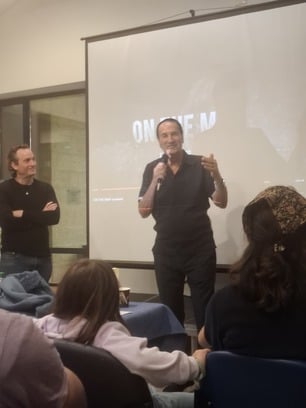
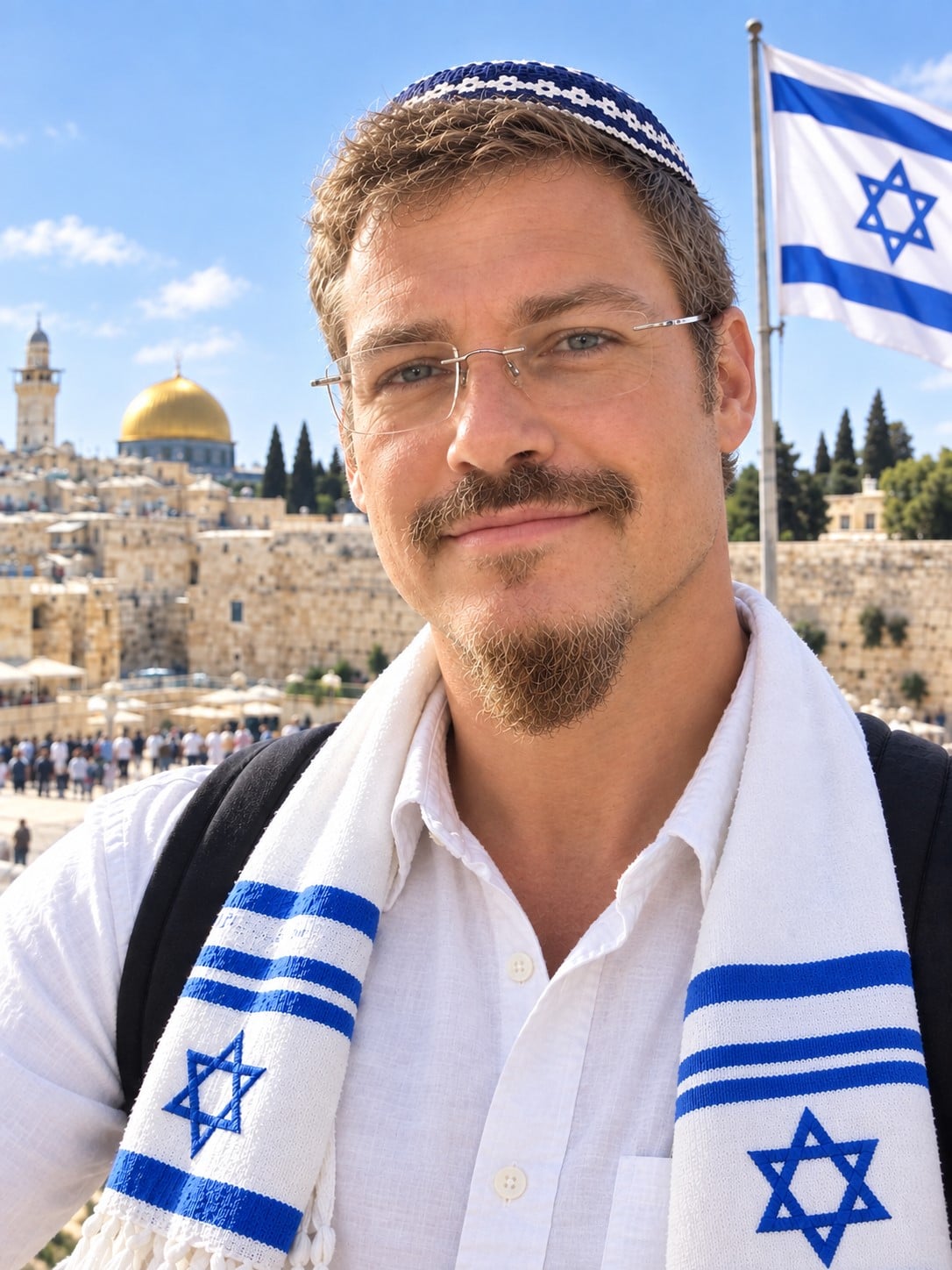
| Yehuda Lave is an author, journalist, psychologist, rabbi, spiritual teacher, and coach, with degrees in business, psychology and Jewish Law. He works with people from all walks of life and helps them in their search for greater happiness, meaning, business advice on saving money, and spiritual engagement. Love Yehuda Lave Join my blog by sending me an email to YehudaLave@gmail.com If you have any comments or questions for me, please don't hit reply as I won't get it, write to me at Yehudalave@gmail.com | | | | | Israel approves limited prayers at Church of the Holy Sepulchre Israel Police approve a limited prayer framework at the Church of the Holy Sepulchre in coordination with the Latin Patriarch, following incident in which Cardinal Pierbattista Pizzaballa was barred from entering the site under wartime restrictions. Israel approves limited prayers at Church of the Holy Sepulchre | Israel National News The police clarified that restrictions at holy sites without standard protected spaces, including the Church of the Holy Sepulchre, stem from Home Front Command directives and are intended to safeguard worshippers. It noted that both the Western Wall Plaza and the Temple Mount complex are also closed to worshippers, due to concerns for public safety. "Iranian regime missiles do not distinguish between religion or background, and the Iranian regime continues to launch missiles toward populated areas and holy sites," the Israel Police stated.
| | | | | | | The Three Musketeers at the Kotel | | | | | | The Three are Rabbi Yehuda Glick, famous temple mount activist, and former Israel Mk, and then Robert Weinger, the world's greatest shofar blower and seller of Shofars, and myself after we had gone to the 12 gates of the Temple Mount in 2020 to blow the shofar to ask G-d to heal the world from the Pandemic. It was a highlight to my experience in living in Israel and I put it on my blog each day to remember. The articles that I include each day are those that I find interesting, so I feel you will find them interesting as well. I don't always agree with all the points of each article but found them interesting or important to share with you, my readers, and friends. It is cathartic for me to share my thoughts and frustrations with you about life in general and in Israel. As a Rabbi, I try to teach and share the Torah of the G-d of Israel as a modern Orthodox Rabbi. I never intend to offend anyone but sometimes people are offended and I apologize in advance for any mistakes. The most important psychological principle I have learned is that once someone's mind is made up, they don't want to be bothered with the facts, so, like Rabbi Akiva, I drip water (Torah is compared to water) on their made-up minds and hope that some of what I have share sinks in. Love Rabbi Yehuda Lave. | | | | | | | Kiddush Hashem: Hatzalah's life-saving effort in Borough Park goes viral | | | | A video documenting haredi "Hatzalah" volunteers fighting for the life of a non-Jewish cyclist who was run over by a truck has sparked a wave of appreciation on social media. | | | | | Passover, also called Pasch (/pæsk/) or Pesach Biblical Hebrew: חַג הַפֶּסַח, romanized: Ḥag Ha‑Pesaḥ, lit. 'Pilgrimage of the Passing Over'), is a major Jewish holiday and one of the Three Pilgrimage Festivals. It celebrates the Exodus of the Israelites from slavery in Egypt. According to the Book of Exodus, God commanded Moses to tell the Israelites to slaughter a lamb and mark their doorframes with its blood, in addition to instructions for consuming the lamb that night. For that night, God would send the Angel of Death to bring about the tenth plague, in which he would smite all the firstborn in Egypt. But when the angel saw the blood on the Israelites' doorframes, he would pass over their homes so that the plague should not enter (hence the name). The story is part of the broader Exodus narrative, in which the Israelites, while living in Egypt, are enslaved en masse by the Pharaoh to suppress them; when Pharaoh refuses God's demand to let them go, God sends ten plagues upon Egypt. After the tenth plague, Pharaoh permits the Israelites to leave . This story is recounted at the Passover Seder by reading the Haggadah. The Haggadah is a standardized ritual account of the Exodus story, in fulfillment of the command "And thou shalt tell [Higgadata] thy son in that day, saying: It is because of that which the LORD did for me when I came forth out of Egypt." Jews are forbidden from possessing or eating leavened foods (chametz) during the holiday. Pesach starts on the 15th day of the Hebrew month of Nisan, which is considered the first month of the Hebrew year. The Rabbinical Jewish calendar is adjusted to align with the solar calendar in such a way that 15 Nisan always coincides with Sunday, Tuesday, Thursday, or Saturday. The Hebrew day starts and ends at sunset, so the holiday starts at sunset the day before. For example, in 2026, 15 Nisan coincides with Thursday, April 2. Therefore, Pesach starts at sundown on Wednesday, April 1, 2026. Pesach may also refer to the lamb or goat which was designated as the Passover sacrifice. Four days before the Exodus, the Hebrews were commanded to set aside a lamb, and inspect it daily for blemishes. During the day on 14th Nisan, they were to slaughter the animal and use its blood to mark their lintels and door posts. Before midnight on 15th Nisan, they were to consume the lamb. The English term Passover is first known to be recorded in the English language in William Tyndale's translation of the Bible, later appearing in the King James Version as well. It is a literal translation of the Hebrew term. In the King James Version, Exodus 12:23 reads: For the LORD will pass through to smite the Egyptians; and when he seeth the blood upon the lintel, and on the two side posts, the LORD will pass over the door, and will not suffer the destroyer to come in unto your houses to smite you. In the Book of Exodus, the Israelites are enslaved in ancient Egypt. Yahweh, the god of the Israelites, appears to Moses in a burning bush and commands Moses to confront the Pharaoh. To show his power, Yahweh inflicts a series of ten plagues on the Egyptians, culminating in the plague of the death of the firstborn. Moses said, "Thus says יהוה: Toward midnight I will go forth among the Egyptians, and every [male] first-born in the land of Egypt shall die, from the first-born of Pharaoh who sits on his throne to the first-born of the slave girl who is behind the millstones; and all the first-born of the cattle. And there shall be a loud cry in all the land of Egypt, such as has never been or will ever be again; — Exodus 11:4–6 Before this final plague, Yahweh commands Moses to tell the Israelites to mark a lamb's blood above their doors so God will pass over them and the plague of the death of the firstborn will not afflict them. The biblical regulations for the observance of the festival require that all leavening be disposed of before the beginning of the 15th of Nisan according to Exodus 13:7 An unblemished lamb or goat, known as the Passover sacrifice or "Paschal Lamb", is to be set apart on 10th Nisan,and slaughtered at dusk as 14th Nisan ends in preparation for the 15th of Nisan when it will be eaten after being roasted.The literal meaning of the Hebrew is "between the two evenings". It is then to be eaten "that night", 15th Nisan, roasted, without the removal of its internal organs with unleavened bread, known as matzah, and bitter herbs known as maror. Nothing of the sacrifice on which the sun rises by the morning of the 15th of Nisan may be eaten, but must be burned. The biblical regulations of the original Passover at the time of the Exodus only also include how the meal was to be eaten: "your loins girded, your sandals on your feet, and your staff in your hand; and you shall eat it hurriedly: it is a passover offering to יהוה."[24] The biblical requirements of slaying the Paschal lamb in the individual homes of the Hebrews and smearing the blood of the lamb on their doorways were celebrated in Egypt. However, once Israel was in the wilderness and the Tabernacle was in operation, a change was made in those two original requirements. Passover lambs were to be sacrificed at the door of the Tabernacle and no longer in the homes of the Jews. No longer, therefore, could blood be smeared on doorways
| | | | | Prohibition of Chametz Removing all leaven (chametz) Chametz is made from one of five types of grains combined with water and left to stand for more than eighteen minutes. The consumption, keeping, and owning of chametz is forbidden during Passover. Yeast and fermentation are not themselves forbidden as seen for example by wine, which is required, rather than merely permitted. According to Halakha, the ownership of such chametz is also proscribed. Chametz does not include baking soda, baking powder or like products. Although these are defined in English as leavening agents, they leaven by chemical reaction, not by biological fermentation. Thus, bagels, waffles and pancakes made with baking soda and matzah meal are considered permissible, while bagels made with sourdough and pancakes and waffles made with yeast are prohibited. The Torah commandments regarding chametz are: To remove all chametz from one's home, including things made with chametz, before the first day of Passover It may be simply used up, thrown out (historically, destroyed by burning), or given or sold to non-Jews. To refrain from eating chametz or mixtures containing chametz during Passover. Not to possess chametz in one's domain (i.e. home, office, car, etc.) during Passover. Observant Jews spend the weeks before Passover in the process of thorough housecleaning, to remove all chametz from every part of the home. Jewish law requires the elimination of olive-sized or larger quantities of leavening from one's possession, but most housekeeping goes beyond this. Even the seams of kitchen counters are thoroughly cleaned to remove traces of flour and yeast, however small. Any containers or implements that have touched chametz are stored and not used during Passover. Some hotels, resorts, and even cruise ships across the United States, Europe, and Israel also undergo a thorough housecleaning to make their premises "kosher for Pesach" to cater to observant Jews. There are also variations with restrictions on eating matzah before Passover so that there will be an increased appetite for it during Passover itself. Primarily among Chabad Chassidim, there is a custom of not eating matzah (flat unleavened bread) in the 30 days before Passover begins. Others have a custom to refrain from eating matzah from Rosh Chodesh Nissan, while the halacha merely restricts one from eating matzah on the day before Passover. Kitniyot Kitniyot (Hebrew: קִטְנִיּוֹת, qitniyyot; literally "small things") refers to legumes, rice, maize, and other foods that are similar to grains. Ashkenazi Jews historically refrain from eating kitniyot on Passover, despite there not being a clear commandment to include them in the category of chametz. Sephardi Jews have always permitted eating kitniyot on Passover. Gebrochts Gebrochts (Yiddish: געבראקטס, lit. 'broken', also known as Hebrew: מצה שרויה, romanized: matzah shruya, lit. 'soaked matzah') refers to matzah that has absorbed liquid. Some Hasidic Jews avoid gebrochts as well, to avoid the possibility that a clump of flour that was never properly mixed with water (and thus is still susceptible to leavening) may come into contact with the liquid. Sale of leaven The former President of Israel Reuven Rivlin sells the leaven of the Beit HaNassi (the official residence of the president), to Shlomo Amar, the Sephardic Chief Rabbi of Israel and the Rishon LeZion, in order that Amar will later sell it to a non-Jew. See also: Chametz § Sale of chametz Leaven or chametz may be sold rather than discarded, especially in the case of relatively valuable forms such as liquor distilled from wheat, with the products being repurchased afterward. In some cases, they may never leave the house, instead being formally sold while remaining in the original owner's possession in a locked cabinet until they can be repurchased after the holiday. Modern observance may also include sealing cabinets and drawers which contain "Chametz" shut by using adhesive tape, which serves a similar purpose to a lock but also shows evidence of tampering. The sale of chametz may also be conducted communally via a rabbi, who becomes the "agent" for all the community's Jews through a halakhic procedure called a kinyan (acquisition). Each householder must put aside all the chametz he is selling into a box or cupboard, and the rabbi enters into a contract to sell all the chametz to a non-Jew (who is not obligated to celebrate the commandments) in exchange for a small down payment (e.g. $1.00), with the remainder due after Passover. This sale is considered completely binding according to Halakha, and at any time during the holiday, the buyer may come to take or partake of his property. The rabbi then re-purchases the goods for less than they were sold at the end of the holiday. Separate kosher for Passover utensils and dishes Due to the Torah injunction not to eat chametz (leaven) during Passover, observant families typically own complete sets of serving dishes, glassware and silverware (and in some cases, even separate dishwashers and sinks) which have never come into contact with chametz, for use only during Passover. Under certain circumstances, some chametz utensils can be immersed in boiling water (hagalat keilim) to purge them of any traces of chametz that may have accumulated during the year. Many Sephardic families thoroughly wash their year-round glassware and then use it for Passover, as the Sephardic position is that glass does not absorb enough traces of food to present a problem. Similarly, ovens may be used for Passover either by setting the self-cleaning function to the highest degree for a certain period, or by applying a blow torch to the interior until the oven glows red hot (a process called libun gamur). | | | | | The Top 7 Most Insane Objects Ever Sold at Auction! | | | | | | Those we have lost Stories of civilians and soldiers killed since Hamas's onslaught on Israel on October 7, 2023
Every day you can look at another victim and send him/her prayers
Those we have lost | The Times of Israel Categories Civilians IDF Israel Defense Forces soldiers and reservists Police officers Israel Police and Border Police officers First responders Local security team members, firefighters and medics Supernova festival Those who attended the Supernova or Psyduck festivals Foreigners Foreign workers, tourists and students | | | | | See you tomorrow bli neder We need Mashiach now! What is disliked by you, don't do to others. Be nice and kind and smile! Love Yehuda Lave If you have any comments or questions for me, please don't hit reply as I won't get it, write to me at Yehudalave@gmail.com | | | | | Yehuda Lave, Spiritual Advisor and Counselor | | | | |