Yehuda Lave is an author, journalist, psychologist, rabbi, spiritual teacher, and coach, with degrees in business, psychology and Jewish Law. He works with people from all walks of life and helps them in their search for greater happiness, meaning, business advice on saving money, and spiritual engagement. Love Yehuda Lave Join my blog by sending me an email to YehudaLave@gmail.com If you have any comments or questions for me, please don't hit reply as I won't get it, write to me at Yehudalave@gmail.com |
|
|
|
|
Seventeenth of Tammuz fastThe Seventeenth of Tammuz (Biblical Hebrew: שִׁבְעָה עָשָׂר בְּתַמּוּז,) is a Jewish fast day commemorating the breach of the walls of Jerusalem before the destruction of the Second Temple. It falls on the 17th day of the fourth Hebrew month of Tammuz and marks the beginning of The Three Weeks, a mourning period leading up to Tisha B'Av.
The day also traditionally commemorates the destruction of the two tablets of the Ten Commandments and other historical calamities that befell the Jewish people on the same date.
History
"The Siege and Destruction of Jerusalem by the Romans Under the Command of Titus, A.D. 70" by David Roberts (1850)
The fast of Tammuz, according to Rabbi Akiva's interpretation, is the fast mentioned in the Book of Zechariah as "the fast of the fourth [month]" (Zechariah 8:19). This refers to Tammuz, which is the fourth month of the Hebrew calendar.
According to the Mishnah five calamities befell the Jewish people on this day:
Moses broke the two tablets of stone on Mount Sinai, when he saw the Golden calf;
During the Babylonian siege of Jerusalem the daily tamid offering ceased to be brought because no sheep were available;
During the Roman siege of Jerusalem, the city walls were breached, leading to the destruction of the Second Temple on Tisha B'Av;
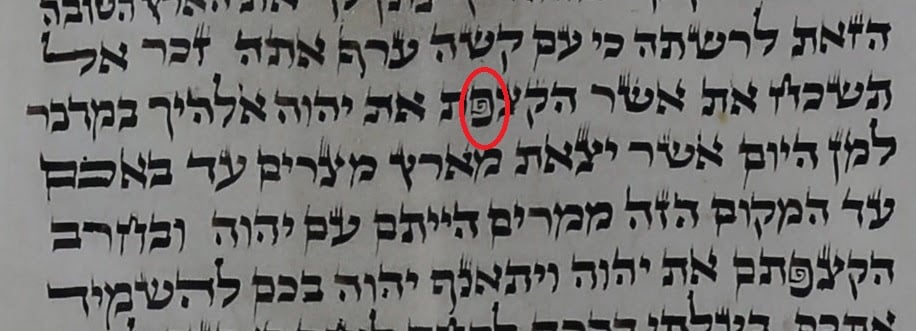
Prior to Bar Kokhba's revolt, Roman military leader Apostomus burned a Torah scroll;
An idol was erected in the Temple.
The Babylonian Talmud places the second and fifth tragedies in the First Temple period.
The Book of Jeremiah (39.2, 52.6–7) states that the walls of Jerusalem during the First Temple were breached on the 9th of Tammuz. Accordingly, the Babylonian Talmud dates the third tragedy (breach of Jerusalem's walls) to the Second Temple period.[6] However, the Jerusalem Talmud (Taanit IV, 5) states that in both eras the walls were breached on 17th Tammuz, and that the text in Jeremiah 39 is explained by stating that the Biblical record was "distorted", apparently due to the troubled times.
The Seventeenth of Tammuz occurs forty days after the Jewish holiday of Shavuot. Moses ascended Mount Sinai on Shavuot and remained there for forty days. The Children of Israel made the Golden Calf on the afternoon of the sixteenth of Tammuz when it seemed that Moses was not coming down when promised. Moses descended the next day (forty days by his count), saw that the Israelites were violating many of the laws he had received from God, and smashed the tablets.
Customs
As a minor fast day, fasting lasts from dawn to shortly after dusk. It is customary among Ashkenazi Jews to refrain from listening to music, public entertainment, and haircuts on fast days, and on this occasion because it is also part of The Three Weeks (see below, Bein haMetzarim). Other deprivations applicable to the major fasts (i.e. Yom Kippur and Tisha B'Av) do not apply.
If the 17th of Tammuz falls on a Shabbat, the fast is instead observed the next day, the 18th of Tammuz (on Sunday). This last occurred in 2022, and will occur again in 2029.
A Torah reading, a special prayer in the Amidah (Aneinu), and in many, but not all, Ashkenazic communities Avinu Malkenu are added at the morning Shacharit and afternoon Mincha services. Ashkenazi congregations also read a haftarah (from the Book of Isaiah) at Mincha. Congregations also recite during Shacharit a series of Selichot (special penitential prayers) reflecting the themes of the day.
Cycle of fasts
The 17th of Tammuz is the second of the four fasts commemorating the destruction of the Temple and the Jewish exile in Babylon. It is preceded by the fast of the Tenth of Tevet and arrives three weeks prior to the 25 hour fast of the Ninth of Av.[12] The cycle is also associated historically with the Fast of Gedalia, which is observed on the third day of Tishrei.
Bein haMetzarim
Main article: The Three Weeks
The three weeks beginning with the 17th of Tammuz and ending with the Ninth of Av are known as Bein haMetzarim ("between the straits", i.e. between the days of distress), or The Three Weeks. Some customs of mourning, which commemorate the destruction of Jerusalem, are observed from the start of the Three Weeks.
The oldest extant reference to these days as Bein haMetzarim – which is also the first source for a special status of The Three Weeks – is found in Eikhah Rabbati 1.29 (Lamentations Rabbah, fourth century CE?). This midrash glosses Lamentations 1:3, "All [Zion's] pursuers overtook her between the straits."
The three weeks of mourning between the 17th of Tammuz and 9th of Av is cited as a rabbinically instituted period of fasting for the "especially pious". Such fasting is observed from morning to evening, common with other rabbi-decreed fasts. |
|
|
|
|
|
| The Three Musketeers at the Kotel |
|
|
|
|
The Three are Rabbi Yehuda Glick, famous temple mount activist, and former Israel Mk, and then Robert Weinger, the world's greatest shofar blower and seller of Shofars, and myself after we had gone to the 12 gates of the Temple Mount in 2020 to blow the shofar to ask G-d to heal the world from the Pandemic. It was a highlight to my experience in living in Israel and I put it on my blog each day to remember. The articles that I include each day are those that I find interesting, so I feel you will find them interesting as well. I don't always agree with all the points of each article but found them interesting or important to share with you, my readers, and friends. It is cathartic for me to share my thoughts and frustrations with you about life in general and in Israel. As a Rabbi, I try to teach and share the Torah of the G-d of Israel as a modern Orthodox Rabbi. I never intend to offend anyone but sometimes people are offended and I apologize in advance for any mistakes. The most important psychological principle I have learned is that once someone's mind is made up, they don't want to be bothered with the facts, so, like Rabbi Akiva, I drip water (Torah is compared to water) on their made-up minds and hope that some of what I have share sinks in. Love Rabbi Yehuda Lave. |
|
|
|
|
|
| The cursed Clal Center: Inside downtown Jerusalem’s spooky concrete jungle |
|
|
|
Once envisioned as the city’s commercial hub, the historic site is now seen as a confusing maze of empty storefronts, urban legends and decades of decline. But it’s got great storiesBy Zev Stub https://www.timesofisrael.com/... |
|
|
|
Using discarded Israeli flags, artist tries to stitch divided country togetherTal Tenne Czaczkes created ‘The Flag of Flags,’ a banner of nearly 700 pennants once abandoned on roadsides, now sewn into a giant canopyBy Jessica Steinberg https://www.timesofisrael.com/... |
|
|
|
Gabrielle Soffer: Using her English for the good of others in IsraelSeven years after arriving alone in Israel, Gabrielle Soffer is now inspiring Israeli high school students through English and literature.https://www.jpost.com/aliyah/a... |
|
|
|
|
ASAF & GABRIELLE COHEN on their wedding day in Beit Lechem Haglalit, May 24, 2020. |
|
|
|
|
|
GABRIELLE SOFFER COHEN in her accelerated English class at ORT Motzkin. (credit: Photos: Courtesy Gabrielle Cohen |
|
|
|
Those we have lostStories of civilians and soldiers killed since Hamas’s onslaught on Israel on October 7, 2023
Every day you can look at another victim and send him/her prayers
Those we have lost | The Times of Israel Categories
Civilians IDF Israel Defense Forces soldiers and reservists Police officers
Israel Police and Border Police officers First responders
Local security team members, firefighters and medics Supernova festival
Those who attended the Supernova or Psyduck festivals Foreigners
Foreign workers, tourists and students |
|
|
|
See you tomorrow bli neder We need Mashiach now! What is disliked by you, don't do to others. Be nice and kind and smile! Love Yehuda Lave If you have any comments or questions for me, please don't hit reply as I won't get it, write to me at Yehudalave@gmail.com |
|
|
|
| Yehuda Lave, Spiritual Advisor and Counselor |
|
|
|
|